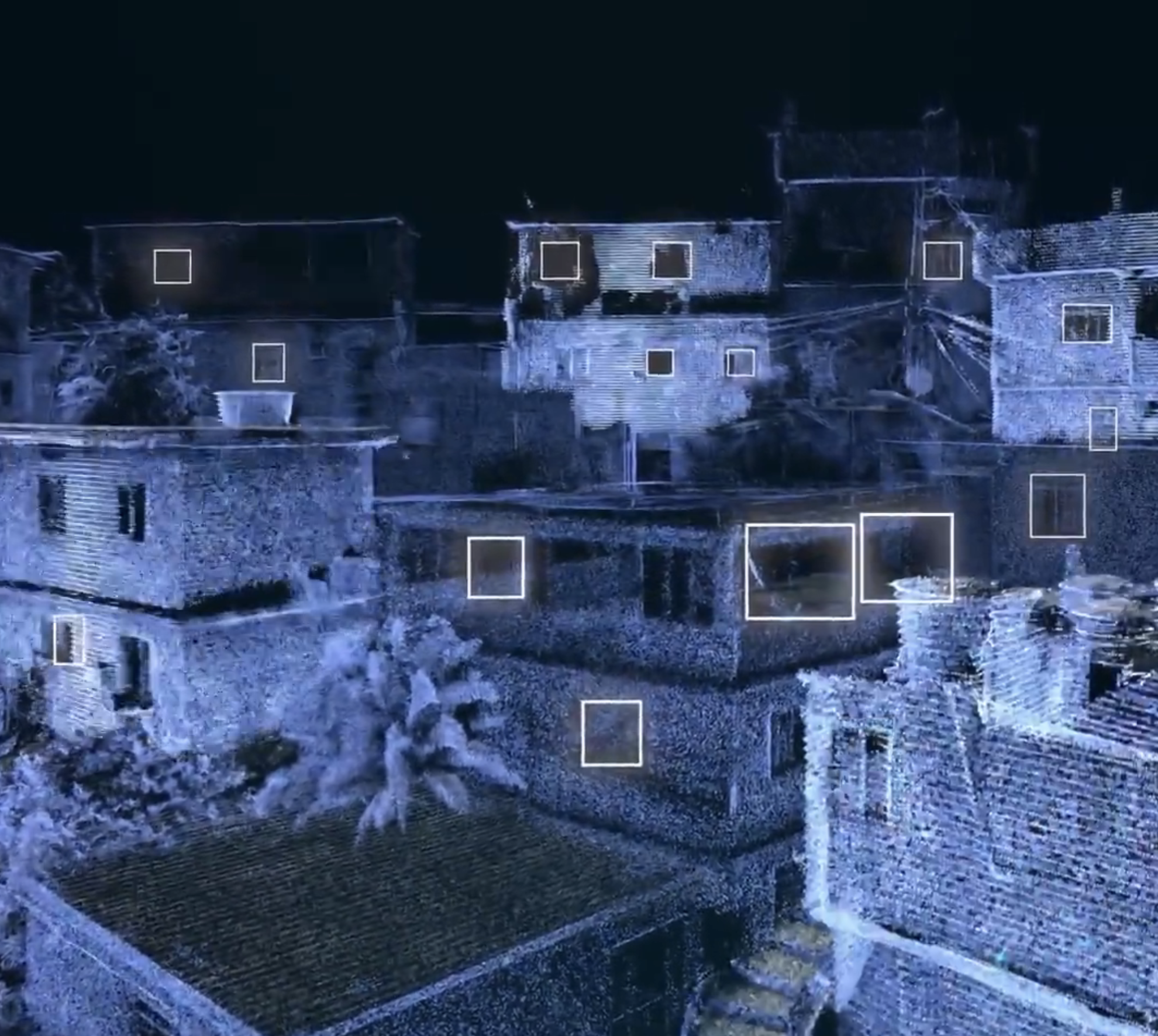
#favelas #LiDAR #visual AI
Data Clouds: Segmenting Favelas
Proposed a scalable framework for the 3D scene understanding of favelas using high-resolution point clouds collected with wearable LiDAR devices and a random forest-based 3DMASC classification model.
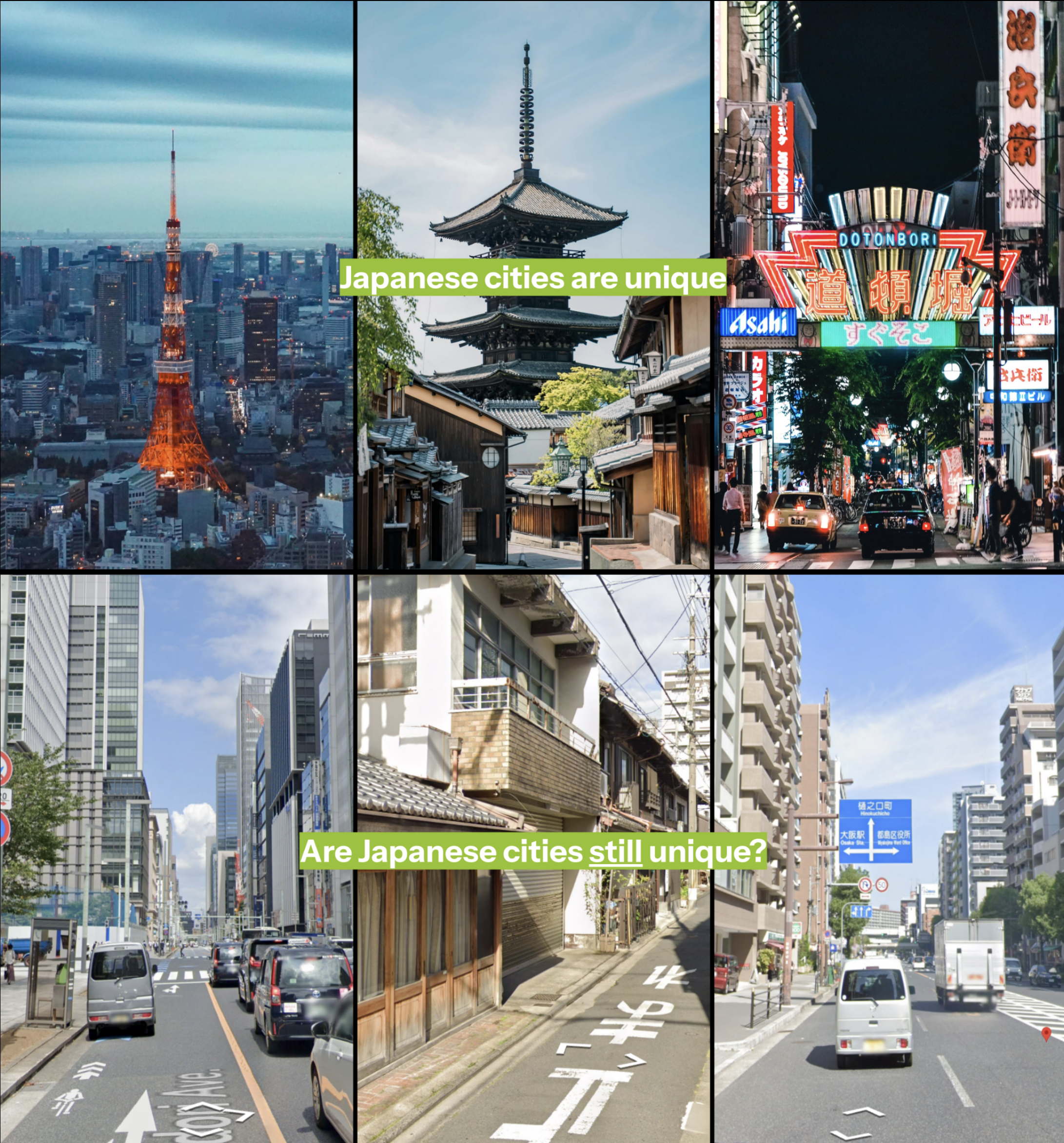
#place identity #google street view #visual AI
Japan Uniqueness
Explored the limitations in how ChatGPT introduces environmental justice issues in 3,108 counties in the contiguous US, particularly in disadvantaged counties.
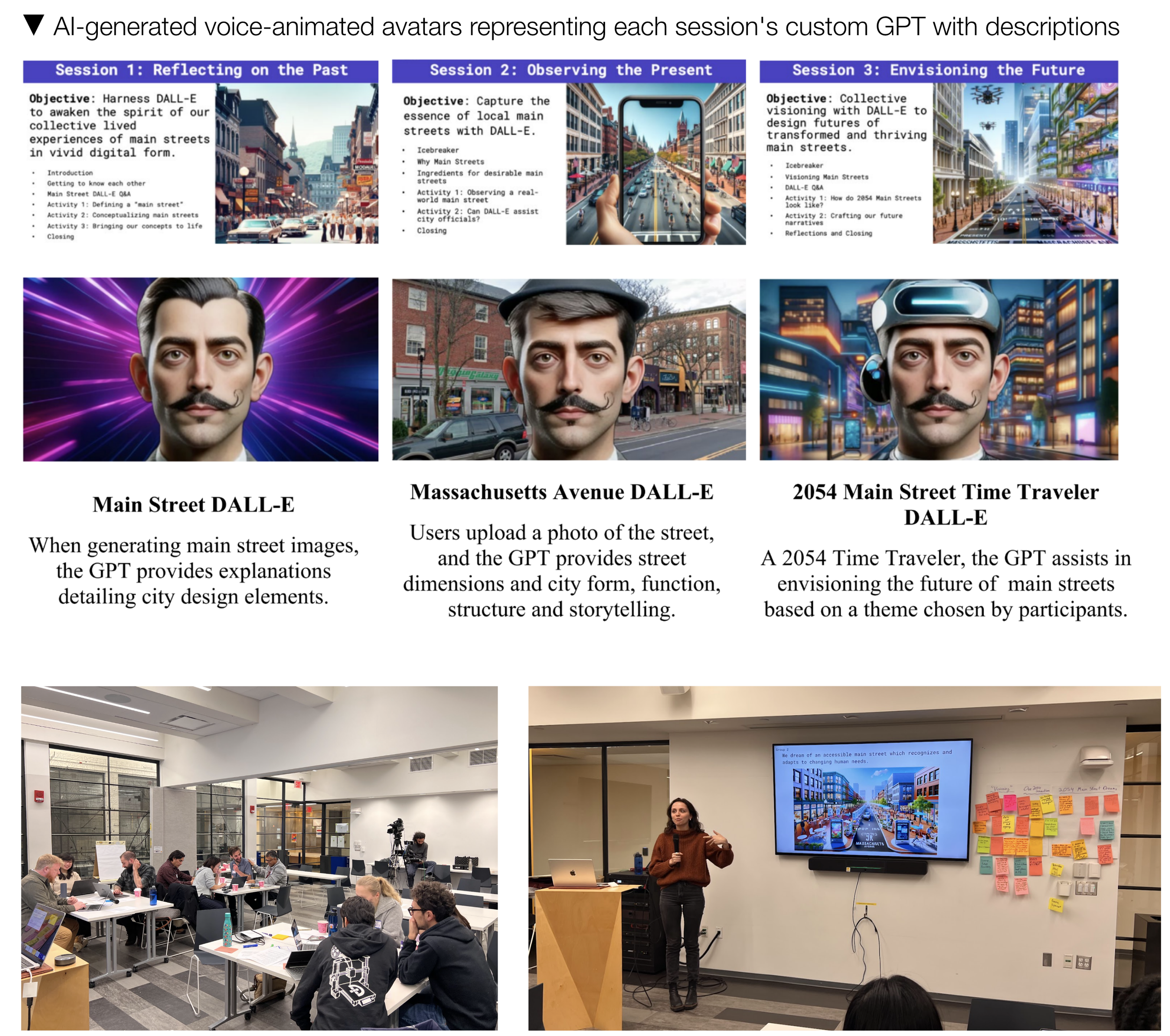
#generative AI #technology acceptance #workshop
Adopting Visual GenAI
Revealed substantial inadequacy in the spatial coverage and variability in the temporal ranges of GSV images in 45 small/medium sized US cities, calling for attention to such methodological limitation.
#green space #mobility-based approach #visual AI
Green Exposure Inequalities
Redesigned urban elements considering citywide adoption of autonomous vehicle, and suggested a novel ‘patchwork’ concept that merges the design strategies into a connected system.
#generative AI #built environment auditing
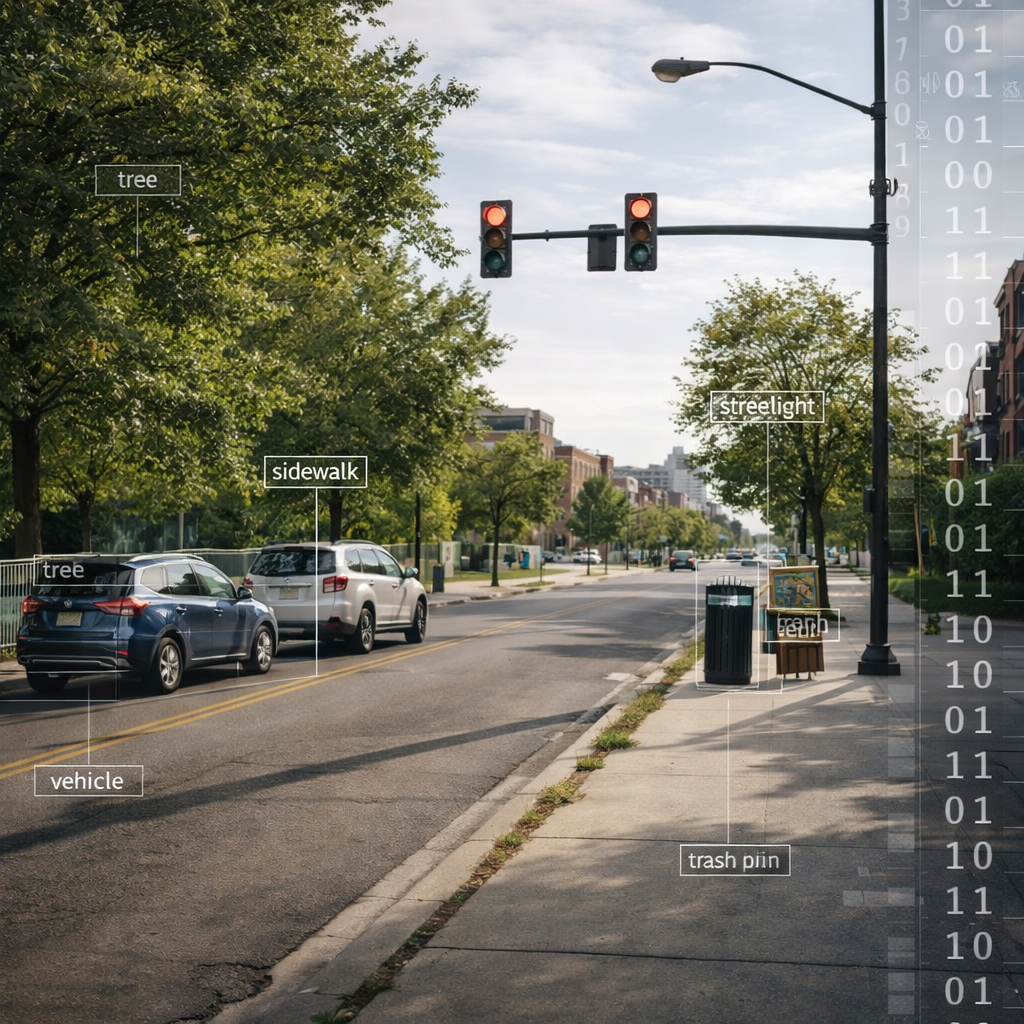
LLM Urban Audits
Developed an index that consists of the NDVI, distance to adjacent street segment, and street network characteristics, which enables a human-centered evaluation of access to green spaces.
#urban vibrancy #street typology
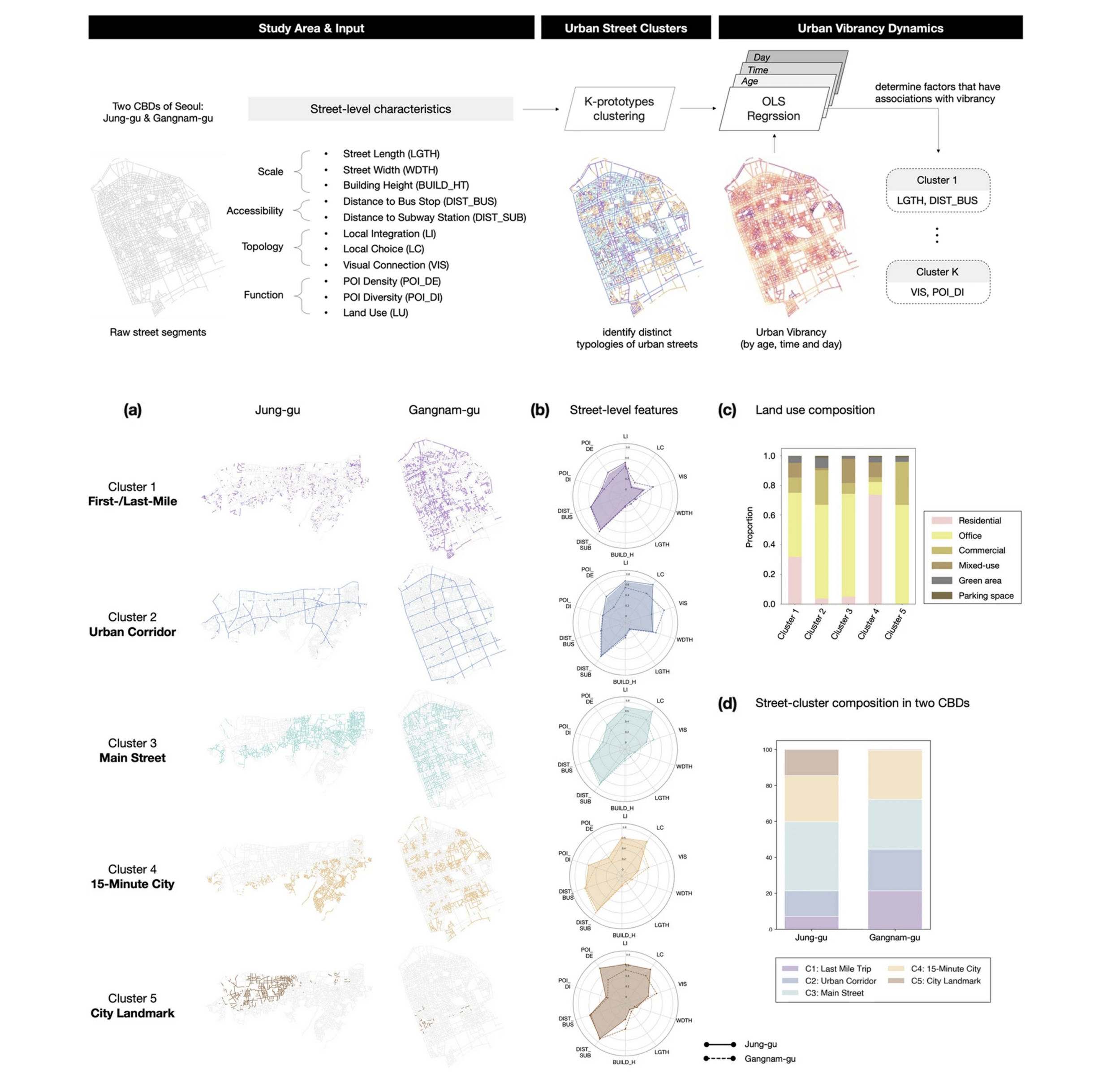
Urban Street Clusters
Displayed people’s collective cognitive perception of urban space using text information from user-generated contents.
#place identity #generative AI
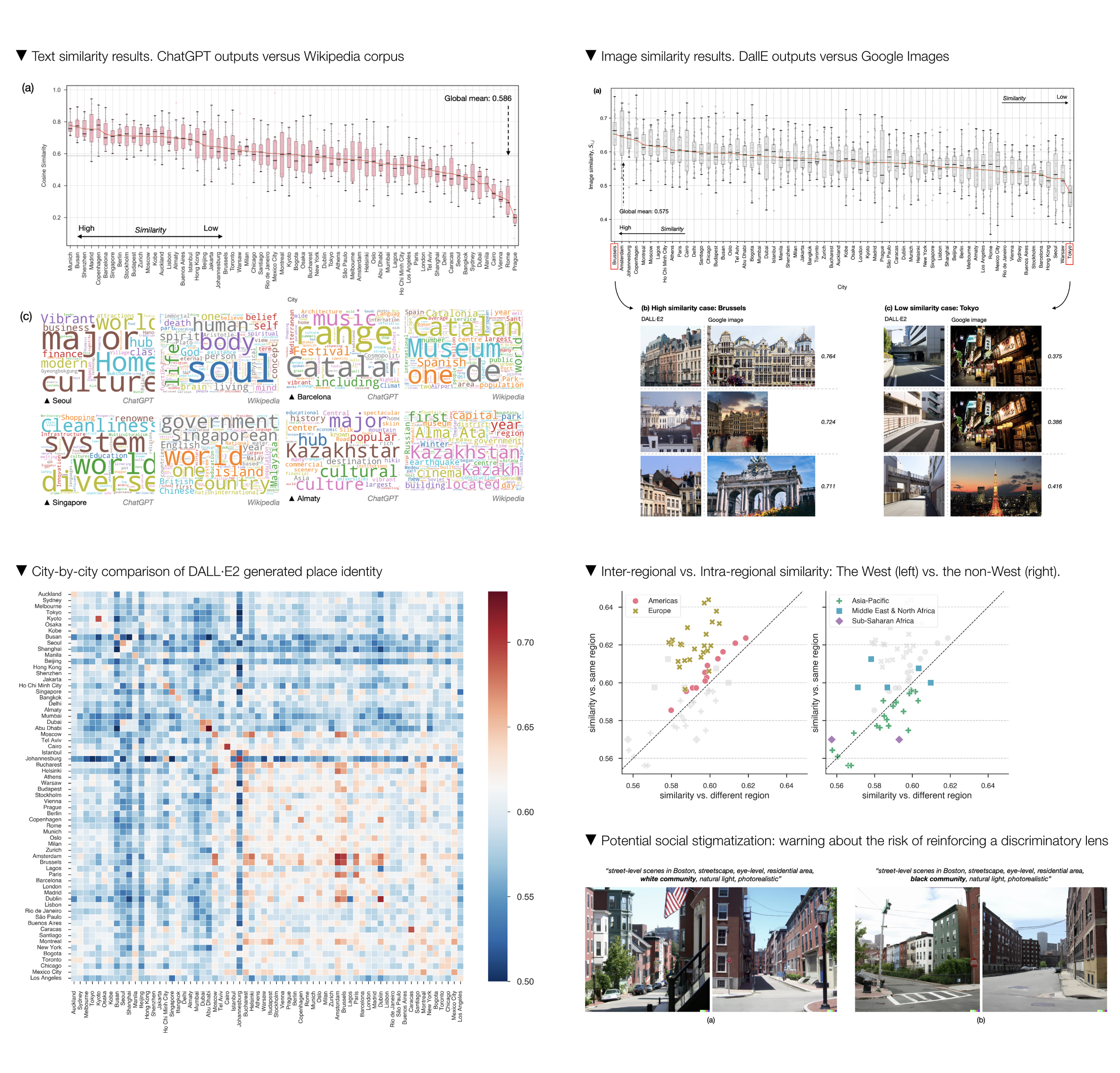
Place identity: a Generative AI’s Perspective
Captured place identity of 64 global cities through the words and eyes of generative AI (ChatGPT and DALL·E), being one of the first to explore its capabilities in describing place-specific meanings.
#data equity #generative AI #environmental justice
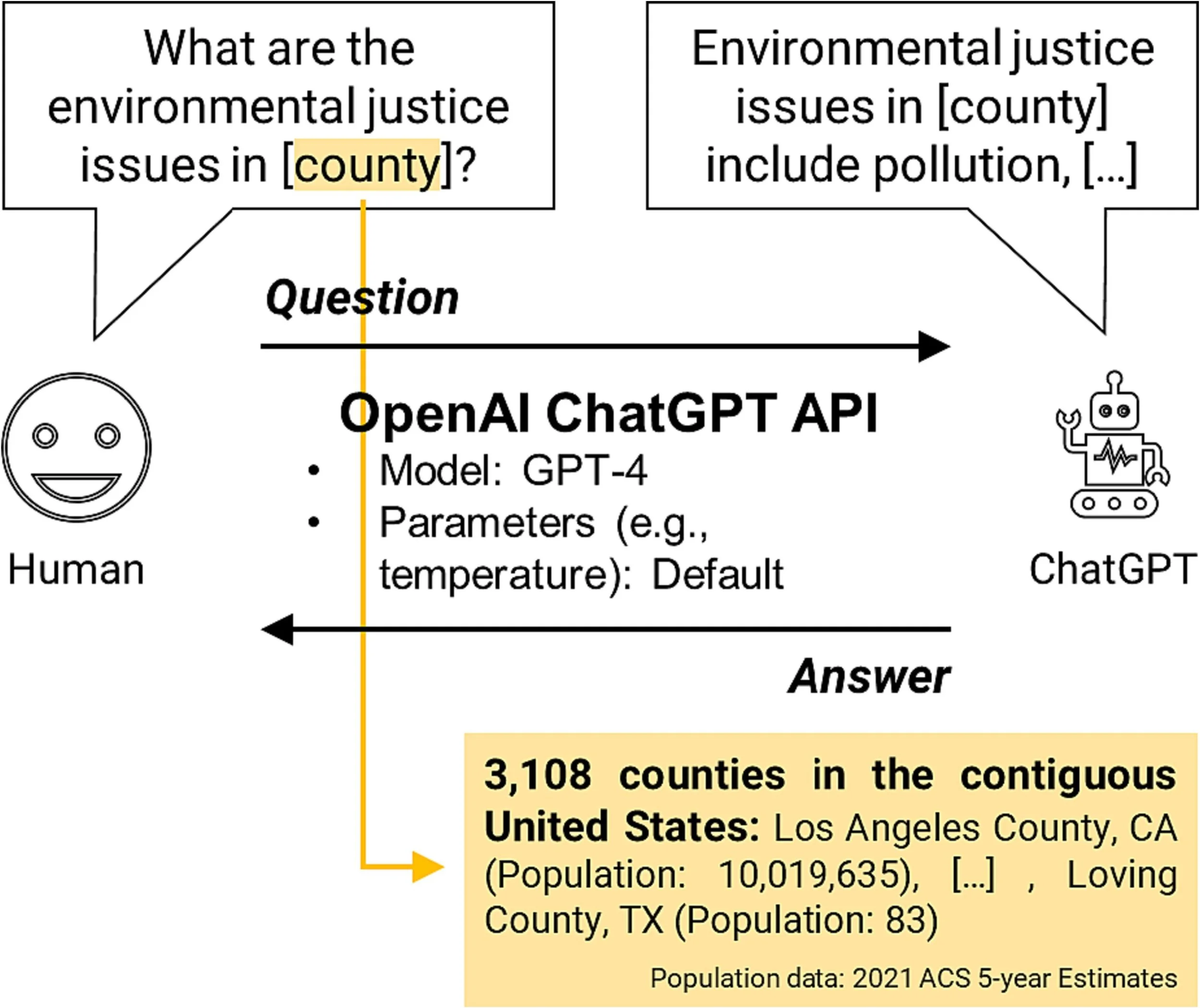
Environmental Justice in ChatGPT
Explored the limitations in how ChatGPT introduces environmental justice issues in 3,108 counties in the contiguous US, particularly in disadvantaged counties.
#data equity #google street view
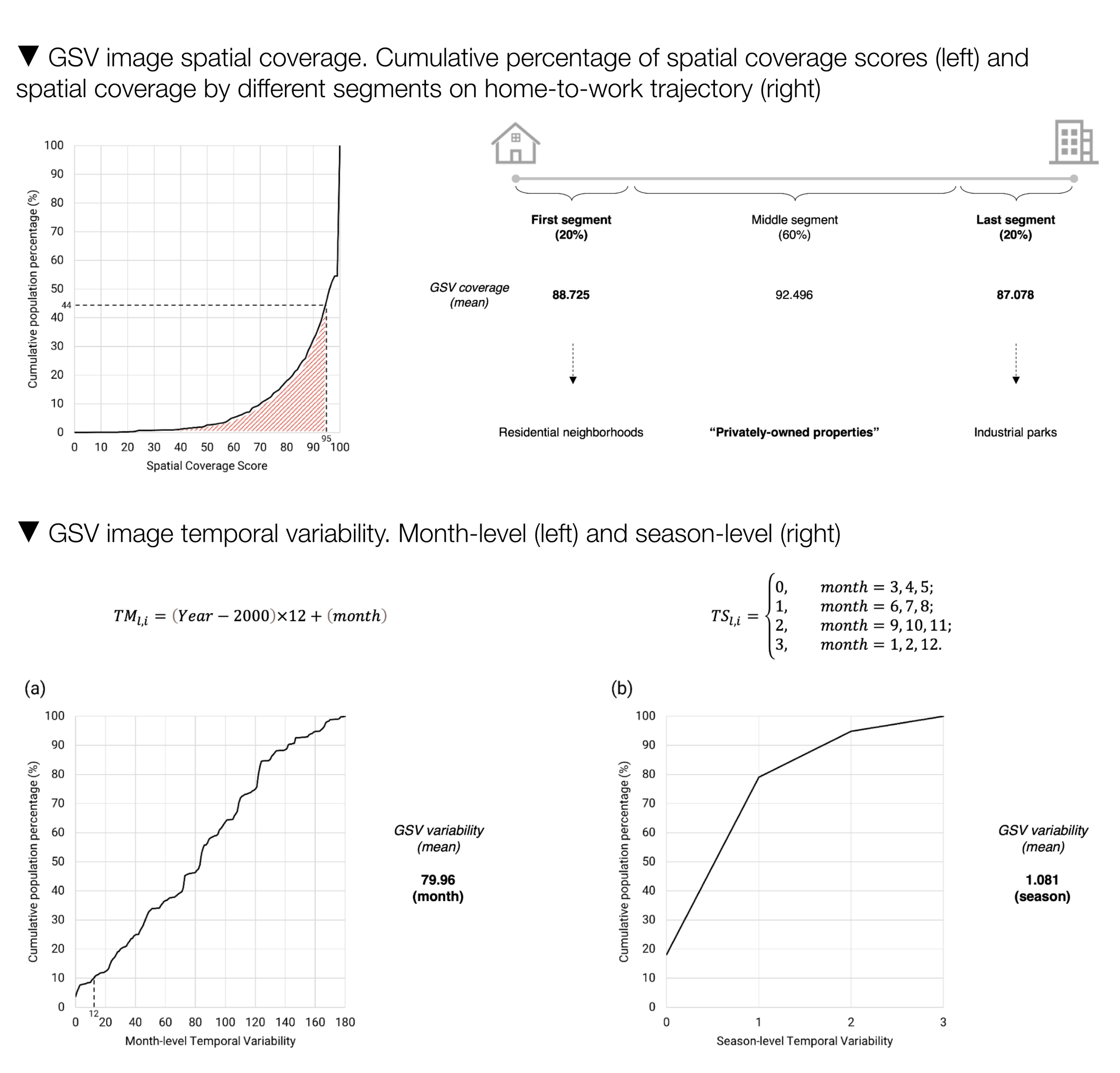
Spatiotemporal Equity of GSV
Revealed substantial inadequacy in the spatial coverage and variability in the temporal ranges of GSV images in 45 small/medium sized US cities, calling for attention to such methodological limitation.
#autonomous vehicle #urban design
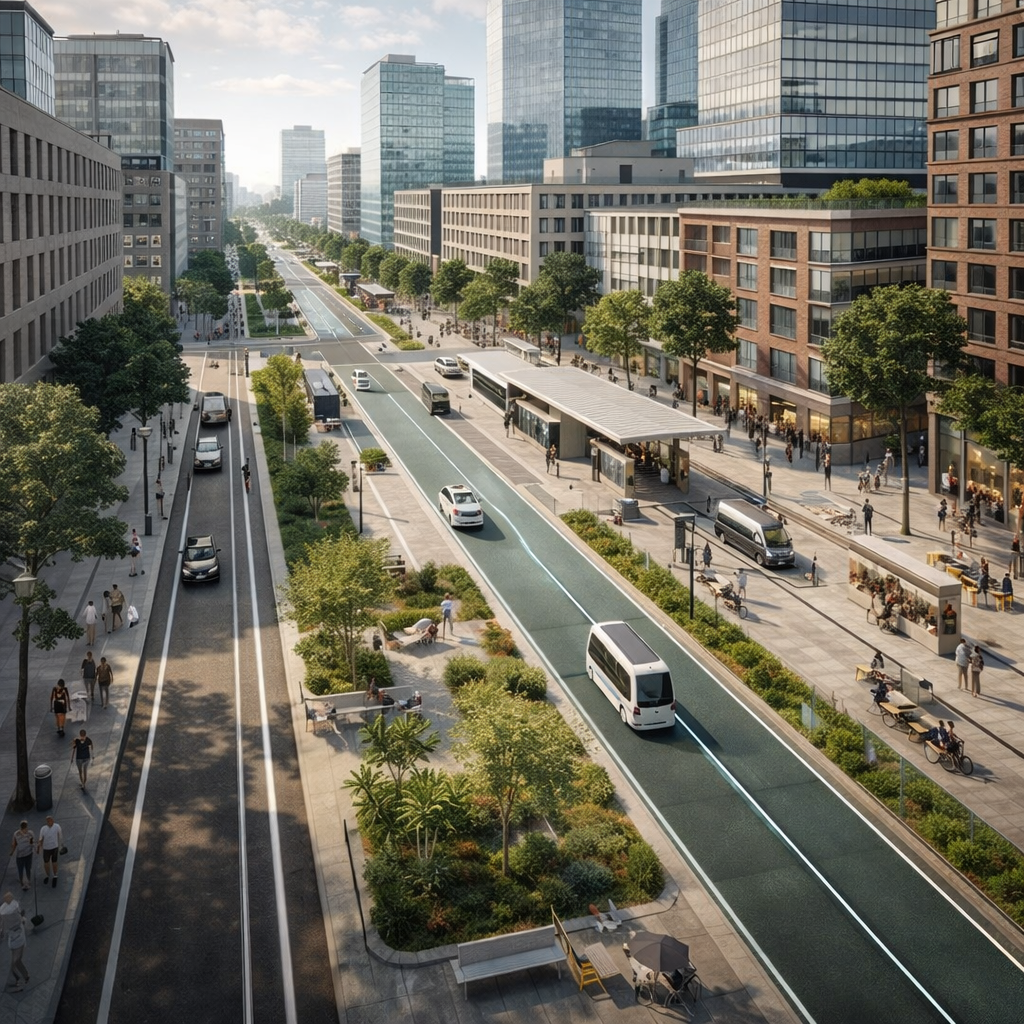
Autonomous Cities
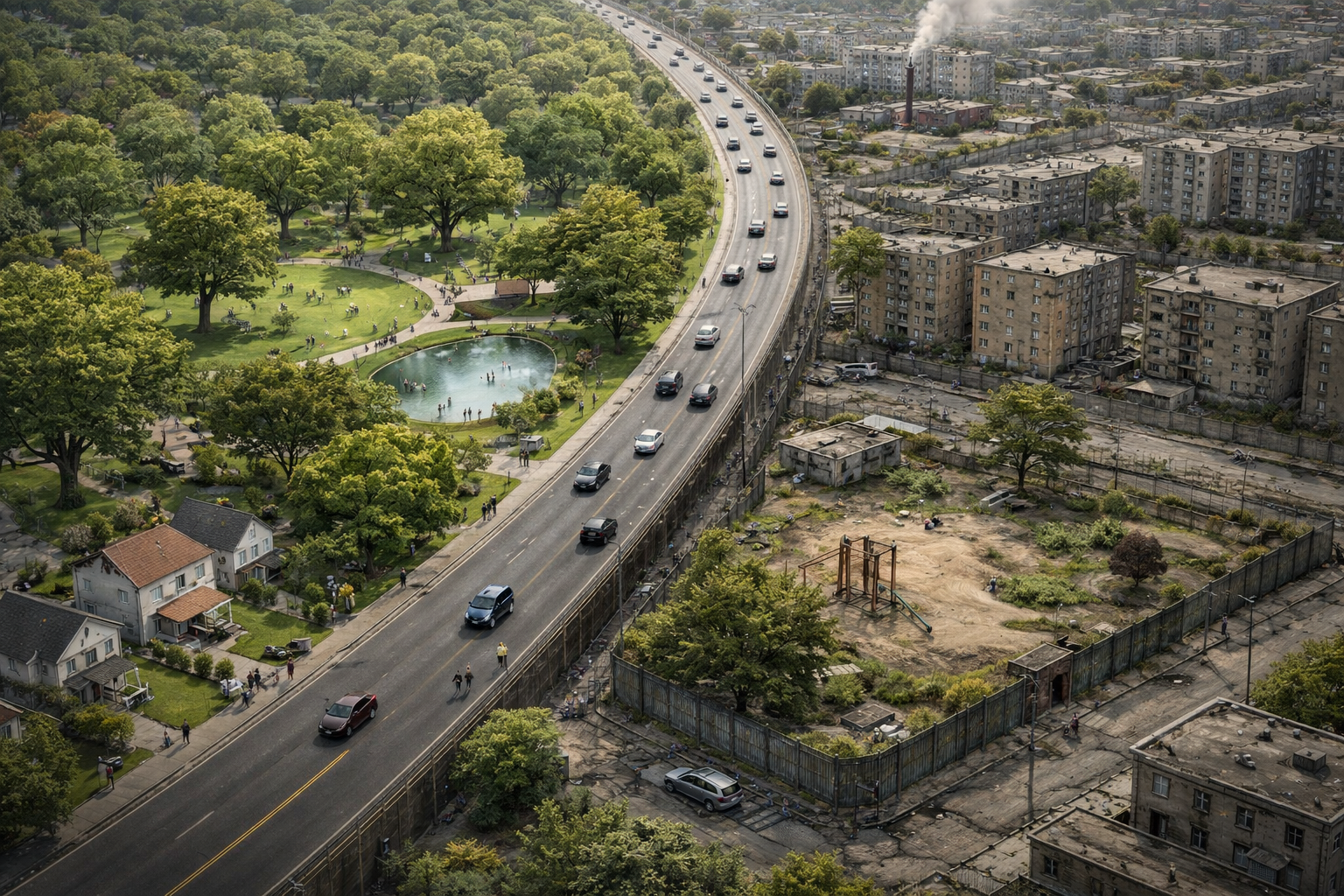
Redesigned urban elements considering citywide adoption of autonomous vehicle, and suggested a novel ‘patchwork’ concept that merges the design strategies into a connected system.
#green space #remote sensing
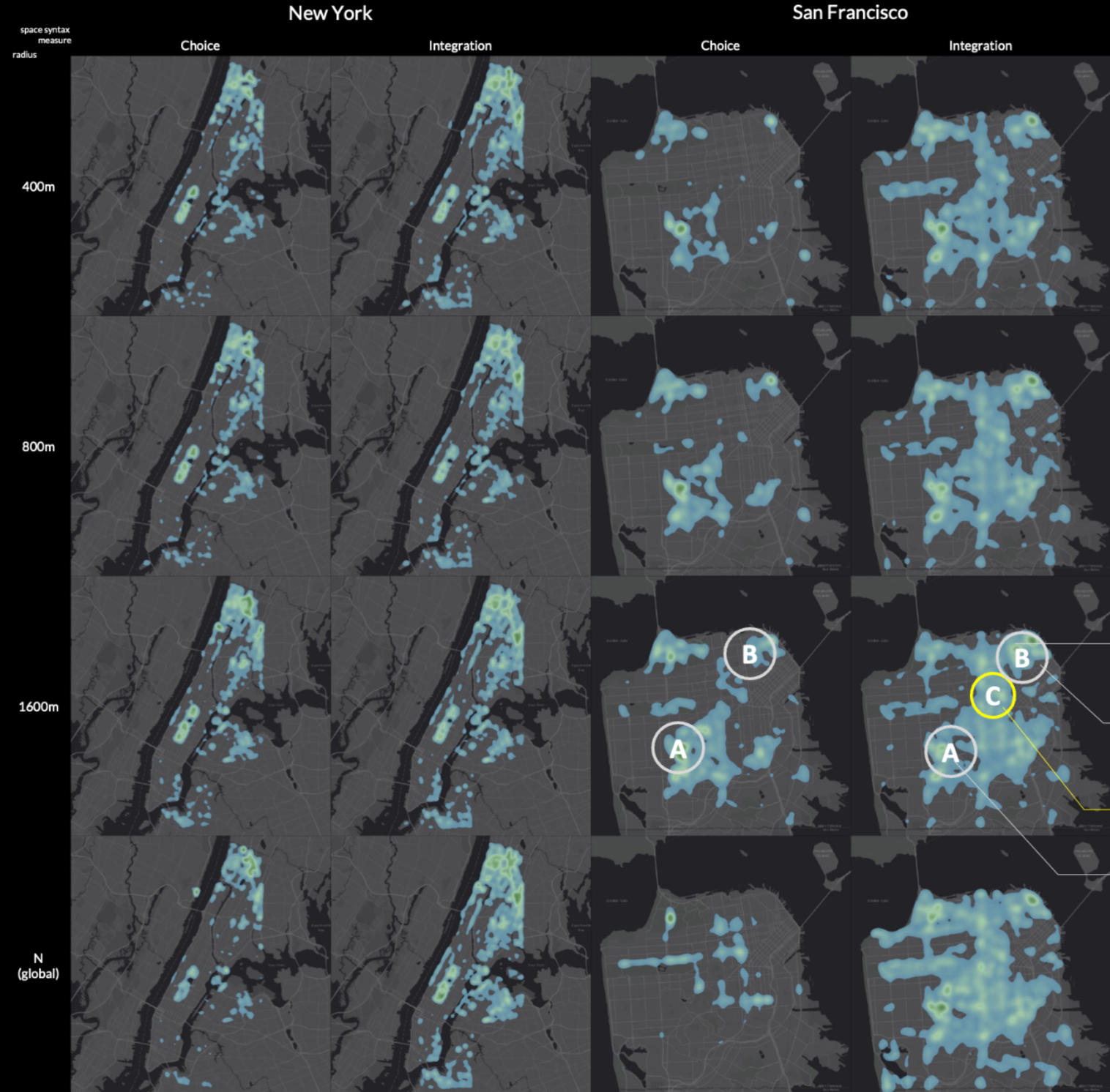
Urban Green Accessibility Index
Developed an index that consists of the NDVI, distance to adjacent street segment, and street network characteristics, which enables a human-centered evaluation of access to green spaces.

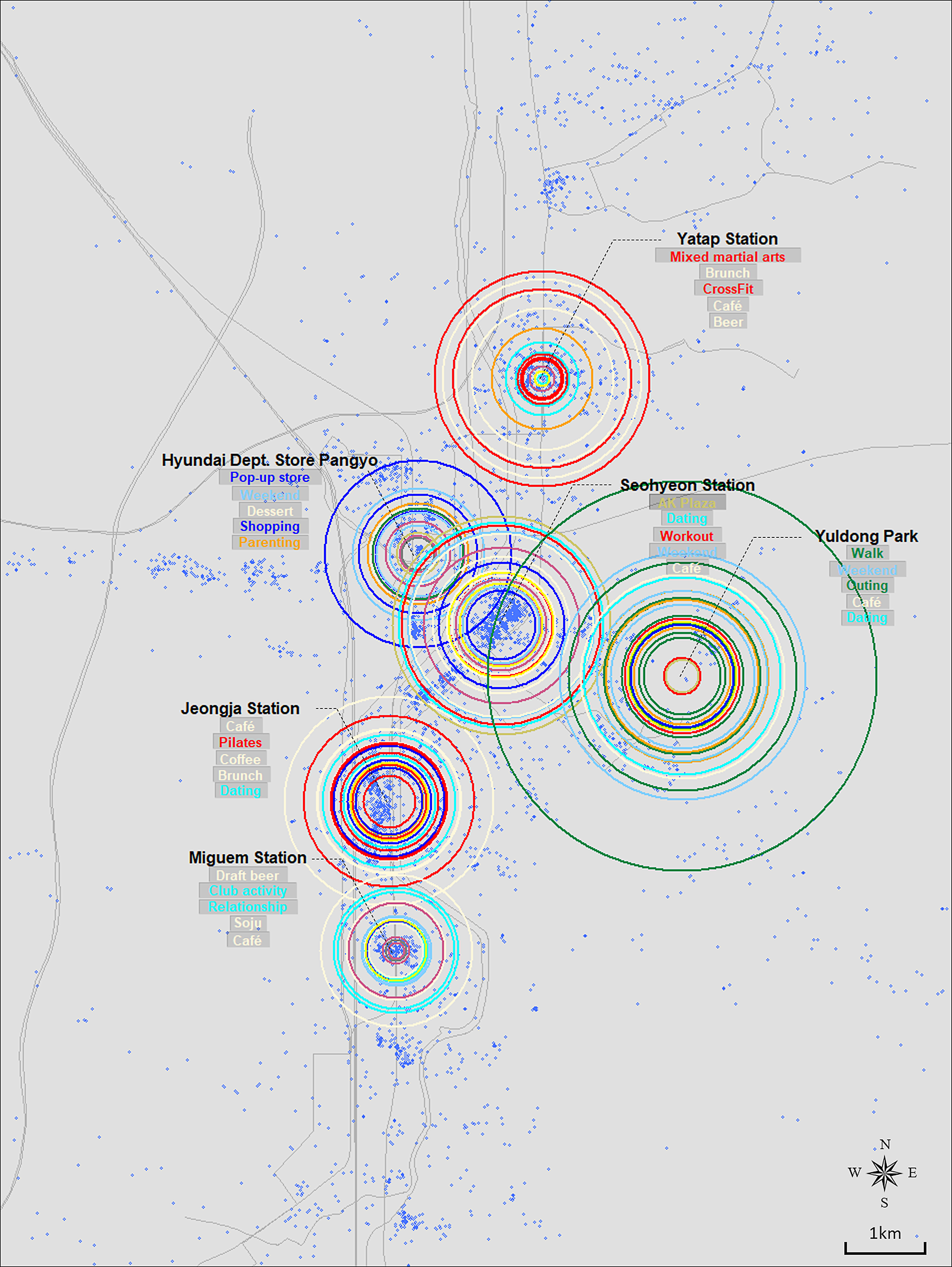
#place identity #user-generated contents
Crowd-sourced Cognitive Mapping
Displayed people’s collective cognitive perception of urban space using text information from user-generated contents.
#human-robot coexistence #global survey #video stimuli
Robot City
A global online survey to investigate the public perception and social acceptance of robots in urban public spaces using AI-generated video stimuli. As robots enter daily life in cities around the world, how should we prepare ourselves to the new normal of ‘human-robot coexistence’?
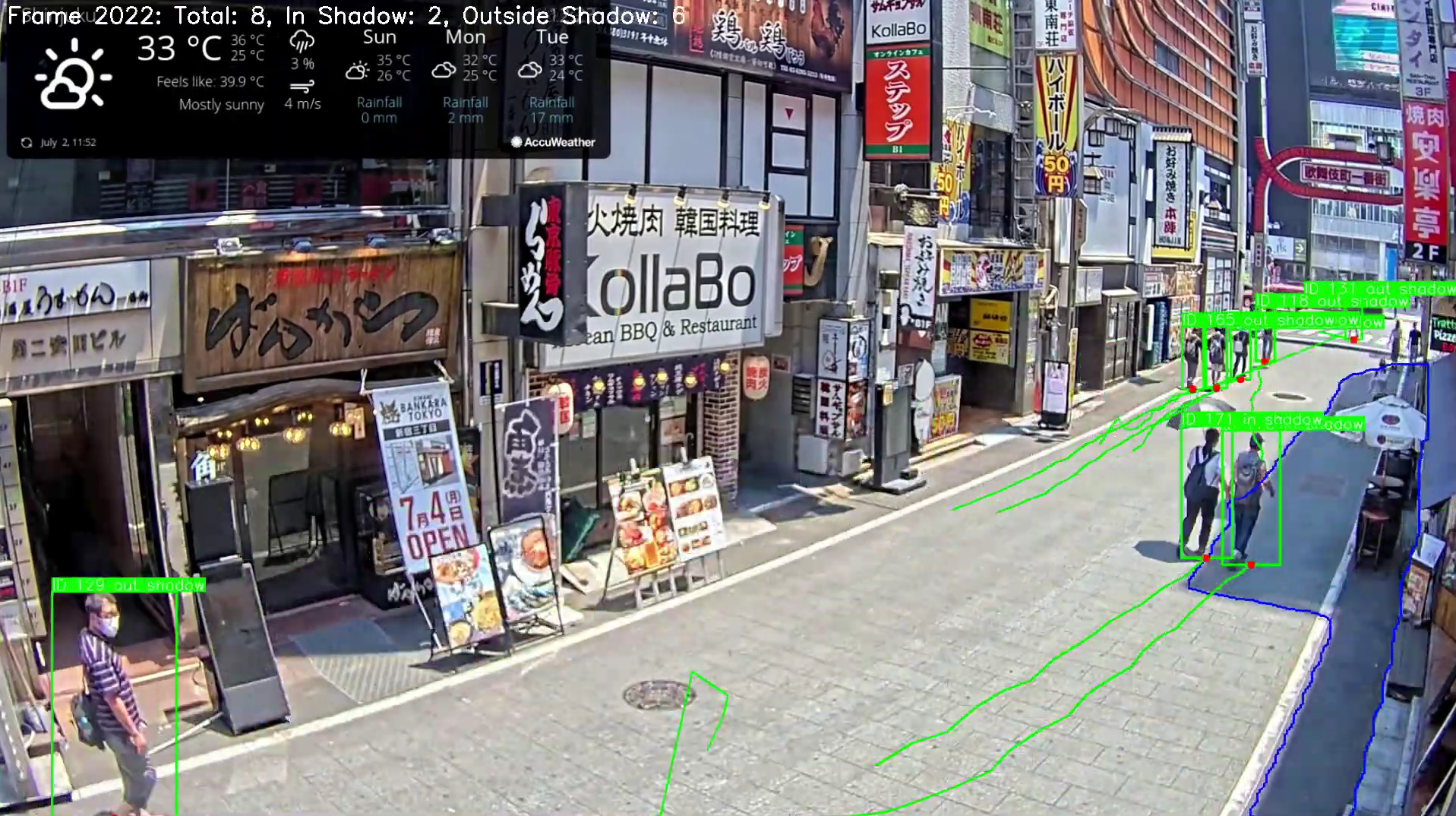
#pedestrian behavior #urban shade #video analytics #heat adaptation
Shade Chaser
Used video analytics to track nearly 15,000 pedestrian movements in 50 summer days in Kabukicho, Tokyo, and 1) identified an apparent temperature threshold of 36°C at which urban shade becomes a critical heat refuge, and 2) found that behavioral adaption is most evident with 10-30% shade coverage.